
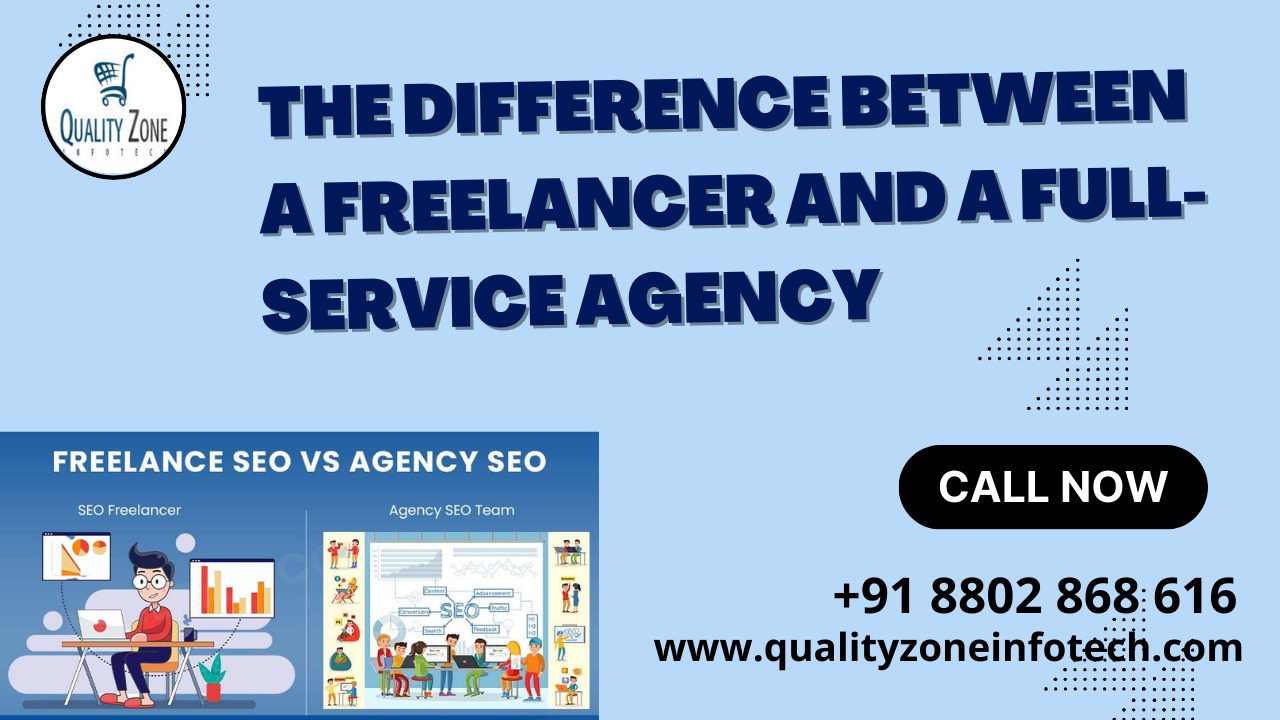
You’ve probably faced this choice before: do you hire one expert or a whole team? On paper, both sound smart. In practice, they work very differently. Let’s think through what each one offers, what they struggle with, and how you can match them to your goals.
Freelancers: focus, speed, and flexibility
Freelancers are like precision tools. They work fast on clear tasks and cost less than a full agency. You talk to one person, agree on scope, and start. That directness often makes projects feel smoother.
Still, there’s a trade. One person means one bandwidth. If they fall sick or get overloaded, progress stops. You might wait days for fixes or updates. Many have seen this play out during urgent SEO audits where a single freelancer managed everything, right down to keyword research and reporting. Great for short runs, stressful for ongoing campaigns.
When you need targeted support, though, a solo expert can save time. Say you only need an audit or content rewrite, hiring a freelancer makes perfect sense. For broader work, you’ll want more structure—something a full team brings. For example, collaborating with an SEO agency in Noida gives you various professioanls working under one plan, which means less juggling on your side.
Full-service agencies: structure and scale
Agencies look slower at first, but the logic behind them is clear. They use layers—strategy, design, writing, and tech—to keep work consistent. You don’t depend on one person’s schedule. There’s usually a project manager who tracks tasks, deadlines, and client feedback.
The thing is, structure adds cost. You pay for the process, QA, and meetings that keep everything aligned. Some clients find that comforting. Others feel it adds distance. You don’t always get that instant “ping and fix” access you have with freelancers.
But the upside is continuity. Even if one team member leaves, your project keeps moving. For brands that handle multiple channels, an agency’s coordination beats juggling three separate freelancers. You also get measurable reporting and version control, which make scaling easier.
Deciding what fits your situation
Let’s make this less abstract.
If you’re a startup testing ideas, go small. Hire a freelancer for design or copy, see what works, and adjust. But once you need consistent content, analytics, and optimization every week, you’ll hit the freelancer’s ceiling. That’s when the agency model starts to pay off.
Part of you might think, “Agencies are too expensive,” but another part knows that managing ten freelancers is its own hidden cost. One missed brief or untracked version can undo a week’s progress. An agency centralizes that chaos.
The choice depends on scope and time, not loyalty to one style. You can even mix both: keep a freelancer for fast edits and let the agency handle strategy and reporting.
Quality, trust, and handover
Quality often comes down to review. Freelancers self-check, which works fine for small projects. Agencies rely on peer review and QA, which prevents errors at scale. If you value that double layer of checking, an agency will feel safer.
And about trust—it grows faster when you share context. Give clear briefs, access to past work, and examples of tone. Both sides need visibility. Often, teams struggle only because expectations are vague. A ten-minute call often fixes that more than another email thread.
Final thought
This isn’t a fight between freedom and formality. It’s about how much coordination your goals need. Start lean, learn the rhythm, and scale with structure when the workload outgrows a single pair of hands. If you ever reach that stage, working with a Search engine optimization company in Noida can bridge both worlds. It gives you agency-level reliability and local understanding without losing personal touch.
That balance, once found, is what keeps projects steady long after the brief is done.
Leave A Comment